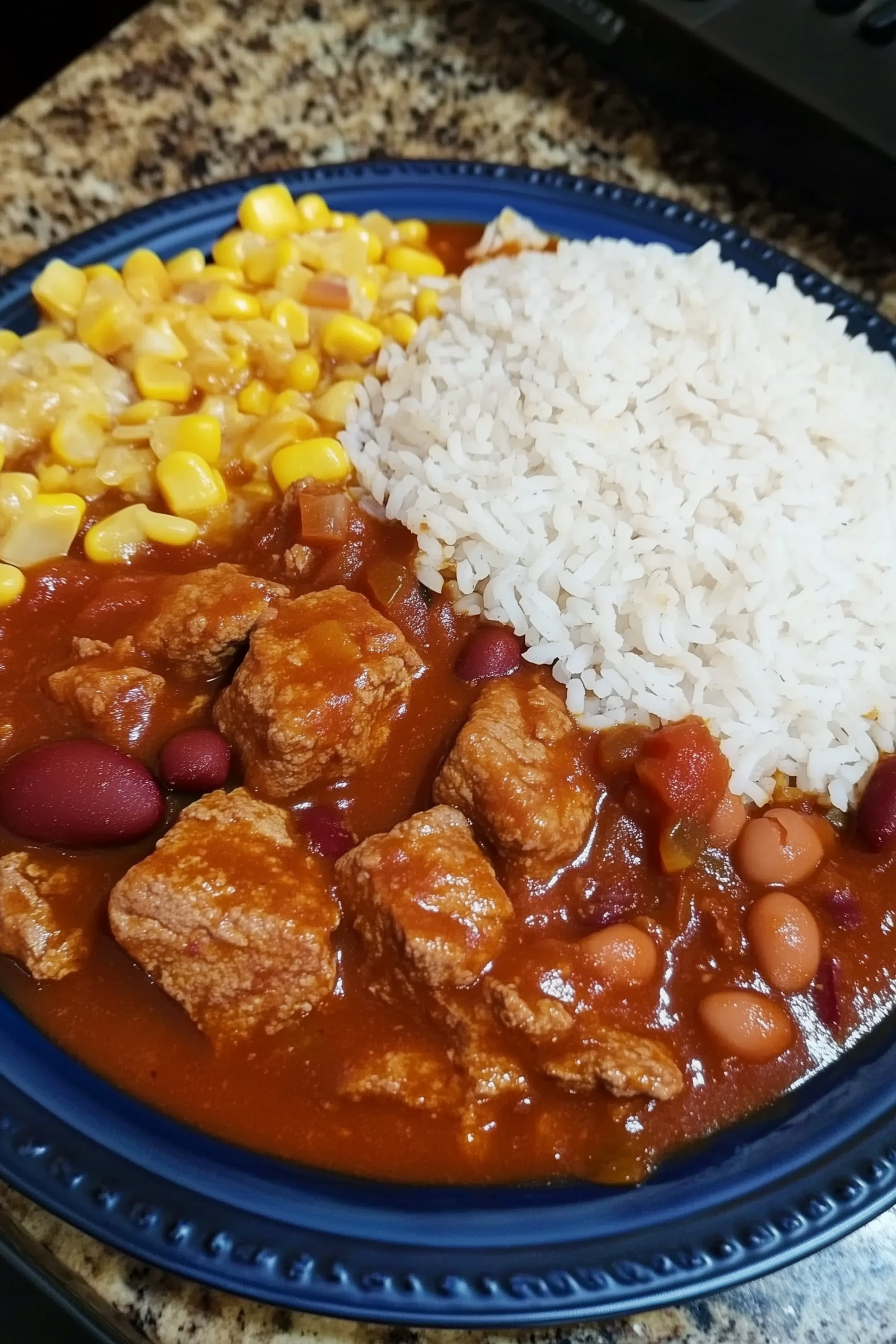
Tender beef simmered in a bold red‑chile sauce, served with rice and beans for a comforting Mexican‑style feast.
Chile Colorado is a hearty and flavorful dish that showcases tender beef (often chuck roast) simmered in a rich, smoky red sauce made from dried chiles and tomatoes. The sauce’s vibrant color and depth of flavor define the dish.
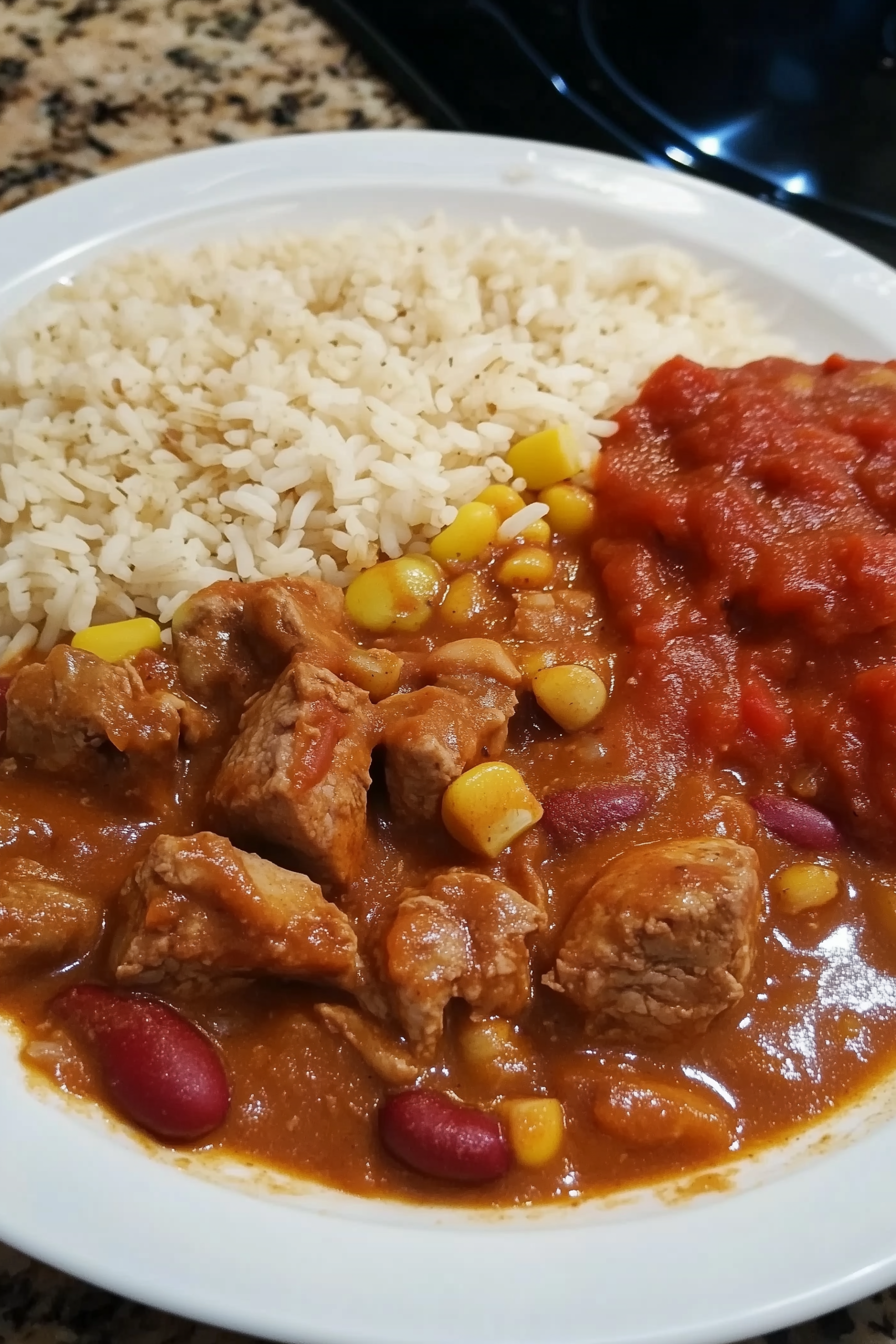
Paired with Mexican‑style rice and beans, this plate offers a complete, satisfying meal—perfect for dinner gatherings or a cozy night in.
Table of Contents
Why You’ll Love This Recipe
-
Deep, rich flavors: The red‑chile sauce—made from rehydrated dried ancho/guajillo chiles, roasted tomatoes, cumin, oregano—delivers smoky complexity and the signature red color (“colorado” means “colored red”).
-
Tender, juicy meat: Slow‑cooking the beef in the sauce breaks it down so that it becomes melt‑in‑your‑mouth tender, absorbing all the sauce’s flavor.
-
Complete and customizable: Served with rice and beans, and optionally tortillas and toppings like avocado, cilantro, cotija cheese, and lime wedges—so you can adapt it to your tastes.
-
Great for gatherings: The aroma, color, and robust flavor make it an impressive centerpiece; it scales well for larger groups.
-
Comforting satisfaction: With its heartiness and bold flavor, this dish offers both comfort and authenticity in one plate.
Ingredients
For the sauce:
-
1 teaspoon olive or vegetable oil
-
1 small white onion, finely chopped
-
2 cloves garlic, minced
-
½ teaspoon ground cumin
-
½ teaspoon dried oregano
-
3 whole dried ancho chiles (or mix of ancho/guajillo)
-
1 (14.5‑oz) can fire‑roasted tomatoes, undrained
-
1 (10‑oz) can diced tomatoes with green chilies (or substitute a second fire‑roasted tomato can)
-
1 cup chicken or beef broth
-
Salt & pepper, to taste
For the meat:
-
2 teaspoons olive or vegetable oil
-
3½ pounds beef chuck roast or stew meat, cut into 1½‑inch cubes
-
Salt & pepper, to taste
For serving:
-
Mexican rice (prepared)
-
Pinto or black beans (prepared)
-
Corn or flour tortillas
-
Sliced avocado
-
Chopped cilantro
-
Lime wedges
-
Cotija cheese
-
Sliced radishes
-
Sour cream
Instructions
Make the sauce:
-
Heat the oil in a large pot over medium heat. Sauté the onion until softened (~4‑6 minutes). Add the garlic and cook ~1 minute until fragrant.
-
Stir in the cumin and oregano.
-
Meanwhile, stem and seed the dried chiles (for milder sauce remove seeds). Place the chiles in a bowl and cover with hot water to soak ~10 minutes.
-
Add the fire‑roasted tomatoes, diced tomato with green chilies, and chicken/beef broth to the pot. Bring to a simmer and cook ~10 minutes.
-
Drain the soaked chiles, discard seeds/stems, place them in a blender with the tomato mixture; blend until smooth. Return sauce to pot, adjust seasoning with salt & pepper.
Cook the meat:
6. Preheat oven to 325 °F (or use a heavy‑bottomed pot that transitions to oven).
7. Heat oil in a large pot or Dutch oven. Season beef cubes with salt and pepper. Brown the meat in batches (~4‑6 minutes each batch) until well‑seared.
8. Return all meat to the pot, pour over the prepared red chile sauce. Cover and bake for ~3 hours or until meat is very tender. Alternatively, you can simmer on stovetop over low or use a slow cooker (6‑8 hrs low).
9. When done, shred or slice the beef as desired.
Serve:
10. Plate the beef mixture alongside or atop Mexican rice and beans. Offer tortillas and toppings (avocado, cilantro, lime wedges, cotija cheese, radishes, sour cream).
Tips / Storage / FAQs
Tips:
-
Using dried chiles (ancho, guajillo) gives true depth of flavor and the signature red color; fresh chiles alone won’t replicate it.
-
Toasting the chiles briefly (dry skillet) before soaking enhances flavor.
-
Browning the meat well adds flavor and texture to the dish.
-
For thicker sauce: after meat is tender, uncover pot and simmer to reduce sauce.
-
Make‑ahead: The dish often tastes even better the next day as flavors develop.
Storage:
-
Refrigerate leftovers in an airtight container for up to 4 days.
-
Freeze for up to 3 months. Thaw overnight in fridge and reheat gently.
FAQs:
-
Can I use pork instead of beef? Yes—many variations use pork shoulder; adjust cooking time accordingly.
-
How spicy is this? The heat depends on the chiles used. Ancho are mild; if you want more heat add arbol chiles or include some seeds.
-
Can I skip soaking the dried chiles? It’s not recommended—soaking rehydrates them and ensures a smooth sauce.
-
What should I serve this with? Mexican rice, beans, tortillas, avocado, cilantro, lime—makes a full plate.
-
Vegetarian version? Yes—skip the meat and substitute hearty vegetables (potatoes, mushrooms) or beans; cook in the red chile sauce until tender.
Final Thoughts
Chile Colorado is a standout dish thanks to its rich red‑chile sauce and tender meat, and when paired with rice and beans it becomes a full, satisfying Mexican‑style plate. It takes a bit of time, but the results reward your effort with flavor, color, and warmth. Perfect for a special dinner or weekend cooking session.
Chile Colorado with Rice & Beans Plate
Ingredients
Method
- Heat the oil in a large pot over medium heat. Sauté the onion until softened (~4‑6 minutes). Add the garlic and cook ~1 minute until fragrant.
- Stir in the cumin and oregano.
- Meanwhile, stem and seed the dried chiles (for milder sauce remove seeds). Place the chiles in a bowl and cover with hot water to soak ~10 minutes.
- Add the fire‑roasted tomatoes, diced tomato with green chilies, and chicken/beef broth to the pot. Bring to a simmer and cook ~10 minutes.
- Drain the soaked chiles, discard seeds/stems, place them in a blender with the tomato mixture; blend until smooth. Return sauce to pot, adjust seasoning with salt & pepper.
- Preheat oven to 325 °F (or use a heavy‑bottomed pot that transitions to oven).
- Heat oil in a large pot or Dutch oven. Season beef cubes with salt and pepper. Brown the meat in batches (~4‑6 minutes each batch) until well‑seared.
- Return all meat to the pot, pour over the prepared red chile sauce. Cover and bake for ~3 hours or until meat is very tender. Alternatively, you can simmer on stovetop over low or use a slow cooker (6‑8 hrs low).
- When done, shred or slice the beef as desired.
- Plate the beef mixture alongside or atop Mexican rice and beans. Offer tortillas and toppings (avocado, cilantro, lime wedges, cotija cheese, radishes, sour cream).
Notes